

Tomatoes are warm-weather plants that normally need a long, sunny season outdoors. A hydroponic setup with a grow light lets you skip the season and the soil. Roots sit in nutrient water instead of dirt, and a lamp stands in for the sun. That means you can grow on a kitchen counter, a spare-room shelf, or a corner with no good window. If you want to learn How To Grow Tomatoes Indoors Using Indoor Hydroponic Grow Lights, this is the starting point: you control the light, the water, and the feeding, so the weather stops being your problem.
Here's what indoor hydroponics actually gives you:
- No soil mess, and no soil-borne pests like fungus gnats breeding in damp potting mix.
- A steady routine. Lights run on a timer and the water sits in a reservoir you top up, so your care is mostly checking and refilling.
- Growing in small spaces. A countertop unit or a vertical tower uses very little floor area.
- No dependence on a sunny window, which matters in winter or in a north-facing room.
Tomatoes do ask more of you than herbs or lettuce. They get tall, they flower, and the flowers need to turn into fruit. Compact varieties bred for containers, often sold as dwarf, patio, or micro types, are the easier pick for indoor setups. A full-size vining tomato can outgrow a small countertop garden fast, so check the seed packet for the expected plant height before you buy.
Some kits are better suited than others. The AeroGarden Harvest holds up to six pods and has a 20W full spectrum LED on an automatic timer, so it suits a first try on the counter with a small variety. If you'd rather build something bigger, a bucket-style system like the VEVOR DWC Hydroponic System 5 Gallon 8 Buckets with Pump gives each plant its own bucket. Either way, think about where the plant will grow tall and whether you can raise or move the light as it does.

AeroGarden Harvest Indoor Hydroponic Garden with LED Grow Light
A countertop hydroponic garden that grows six plants in water with a full spectrum LED light doing the work.
Product information
Product Review Score
4.85 out of 5 stars
(129 reviews)Product links
One hazard to plan for: you're mixing water and electricity. Keep plugs, power strips, and timers up off the floor and away from the reservoir, and wipe up spills and drips before they reach any outlet. Pumps and lamps should sit where a knocked cup or an overfilled tank can't splash them. Check the maker's manual for how to fill and handle your particular unit.
Picking the Right Grow Lights for Tomatoes
Tomatoes want a lot more light than herbs or lettuce, so a weak lamp is the most common reason an indoor plant stays leggy and never fruits. Look for a full spectrum LED, which gives the plant a wide mix of light instead of one color. Small clip-on lamps and desk lights are fine for seedlings, but they rarely have the output to carry a fruiting plant on their own.
Check three things before you buy. First, can the light move? Tomatoes keep growing up, so you want a lamp on an adjustable arm, a gooseneck, or a kit where the planting height changes. The MUFGA 18 Pod Hydroponic Herb Garden with LED Grow Light, for example, lets you adjust the planting height as plants grow and has separate modes for vegetables and for flowers and fruit. That kind of mode switch matters for tomatoes, since they go through a leafy stage and then a flowering stage.
Second, look at the timer. Tomatoes grow best with a long daily light period and a real dark period, so a light that runs nonstop is not what you want. Pick a lamp with a built-in timer, or plug a basic outlet timer into the wall. Check the seed packet or the maker's manual for how many hours your variety wants, since it varies. Third, think about coverage. One small lamp lights a small patch, so a plant that spreads wide may leave its lower branches in the dark. If you grow more than one plant, plan for the light to reach each one.
If you already own a lamp with a standard socket, a grow bulb can save you buying new gear. The SANSI 36W BR30 Grow Light Bulb 4000K Full Spectrum screws into a standard socket and covers the visible range from 400nm to 780nm. Check that your lamp's fitting and rating can handle that bulb before you screw it in.

SANSI 36W BR30 Grow Light Bulb 4000K Full Spectrum
A BR30 screw-in bulb with a full spectrum output, built to fit standard sockets for indoor plants.
Product information
Product Review Score
4.94 out of 5 stars
(129 reviews)Product links
Lights get warm and they run for many hours a day, so watch the heat. Keep the lamp from touching leaves, and keep fabric, paper and curtains well away from it. Use the distance the maker recommends in the manual, and move the light up as the plant grows instead of guessing. If leaves look scorched or pale near the lamp, raise it a bit.
Setting Up Your Hydroponic Tomato System
A hydroponic tomato setup comes down to four parts: a container that holds the roots, a nutrient solution, something to support the plant, and a light on a timer. Start with the container and the growing medium. Seedlings usually start in small pods or a starter plug, such as rockwool or a peat-free plug, then move into the system once the roots show. Pods that come with a kit work fine for the first few weeks. A tall tomato needs more room than a herb pod gives it, so plan for a bigger spot or a bigger container if you want fruit.
Next, pick the kind of system that matches your plant count. A countertop kit like the Ahopegarden 10 Pod Indoor Hydroponic Garden with LED Grow Light gives you ten stations, a water reservoir, and a see-through water level window, so you can see when to top up. That window is handy because tomatoes drink more as they grow. If you want several plants with their own water supply, the bucket system mentioned earlier is the better fit.
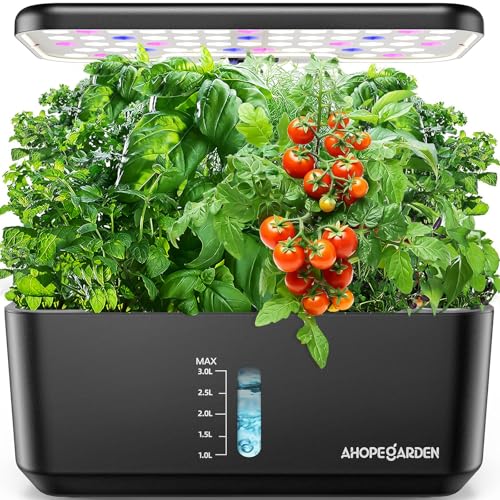
Ahopegarden 10 Pod Indoor Hydroponic Garden with LED Grow Light
A countertop hydroponic kit with ten pods, an LED light and a water level window, so you can grow herbs and greens at home.
Product information
Product Review Score
4.46 out of 5 stars
(226 reviews)Product links
Now the feeding. Use a nutrient mix made for hydroponics, not regular garden fertilizer, and follow the dosing on the bottle for the plant stage. Brands differ, so read the label. Many growers use one formula for the leafy stage and a different one once flowers appear, but check what your product says. Add nutrients to the water, not the plant, and top up the reservoir with plain water between changes. Swap the whole solution on the schedule the nutrient maker gives, and wash the reservoir when you do.
Then handle the tall, flowering part. Give each plant a stake, a small trellis, or a soft tie to a support once it starts leaning. Tomato flowers need help to set fruit indoors because there is no wind or insects. Gently tap or shake the flower stems every day or two while blooms are open, or brush each flower lightly with a soft brush. Check a plant guide or your seed packet for how long flowering and ripening take for your variety.
Last, set a simple routine. Look at the water level every few days, and check that the pump is running if your kit has one. Keep the room warm and the air moving a little, since stale, damp air is hard on plants. Pumps and lights run on mains power, so always unplug a unit before you move it, clean the reservoir, or reach near the electrics.
Common Indoor Tomato Problems and Quick Fixes
Leggy, stretched stems are the most common indoor tomato complaint. The plant is reaching for light, so lower the lamp toward the canopy, or move the plant closer. Check the timer too, because a lamp that's off half the day it should be on will do the same thing. If the plant is still tall and thin after that, the lamp probably isn't strong enough for a fruiting tomato.
Flowers that drop without setting fruit come next. Pollination is up to you indoors, so use the hand-tapping method described above. Warm, very dry or very humid air can also make blooms fall, so check the room conditions and your seed packet for the range your variety likes. Keep one eye on the plant's age as well, since young plants sometimes drop their first few flowers before they settle in.
Leaf problems tell you a lot if you look closely. Yellowing on the older, lower leaves often points to a nutrient issue, so compare your mix and dosing against the label. Curled or crispy leaves close to the lamp usually mean the light is too near or too hot, so raise it. Slimy, brown or foul-smelling roots are a water problem. Drain the reservoir, wash it, rinse the roots with clean water, and refill with fresh solution. Keep light out of the reservoir where you can, since light on nutrient water helps algae grow. A green film in the tank is a sign to clean it sooner.
Tiny flying bugs around the pods and sticky or speckled leaves are common in any indoor garden. Look under the leaves first. Wipe off what you see, keep the area free of dead leaves and standing water, and check your plants every few days so a small problem stays small.


